
Abbey's Roadbuilder
Abbey’s Roadbuilder
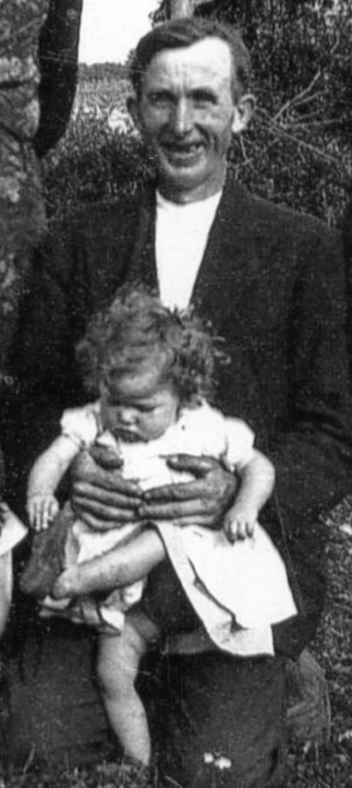
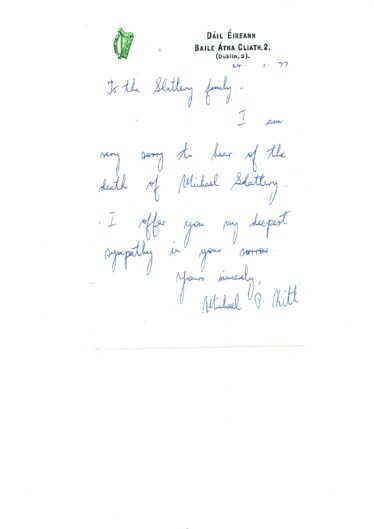
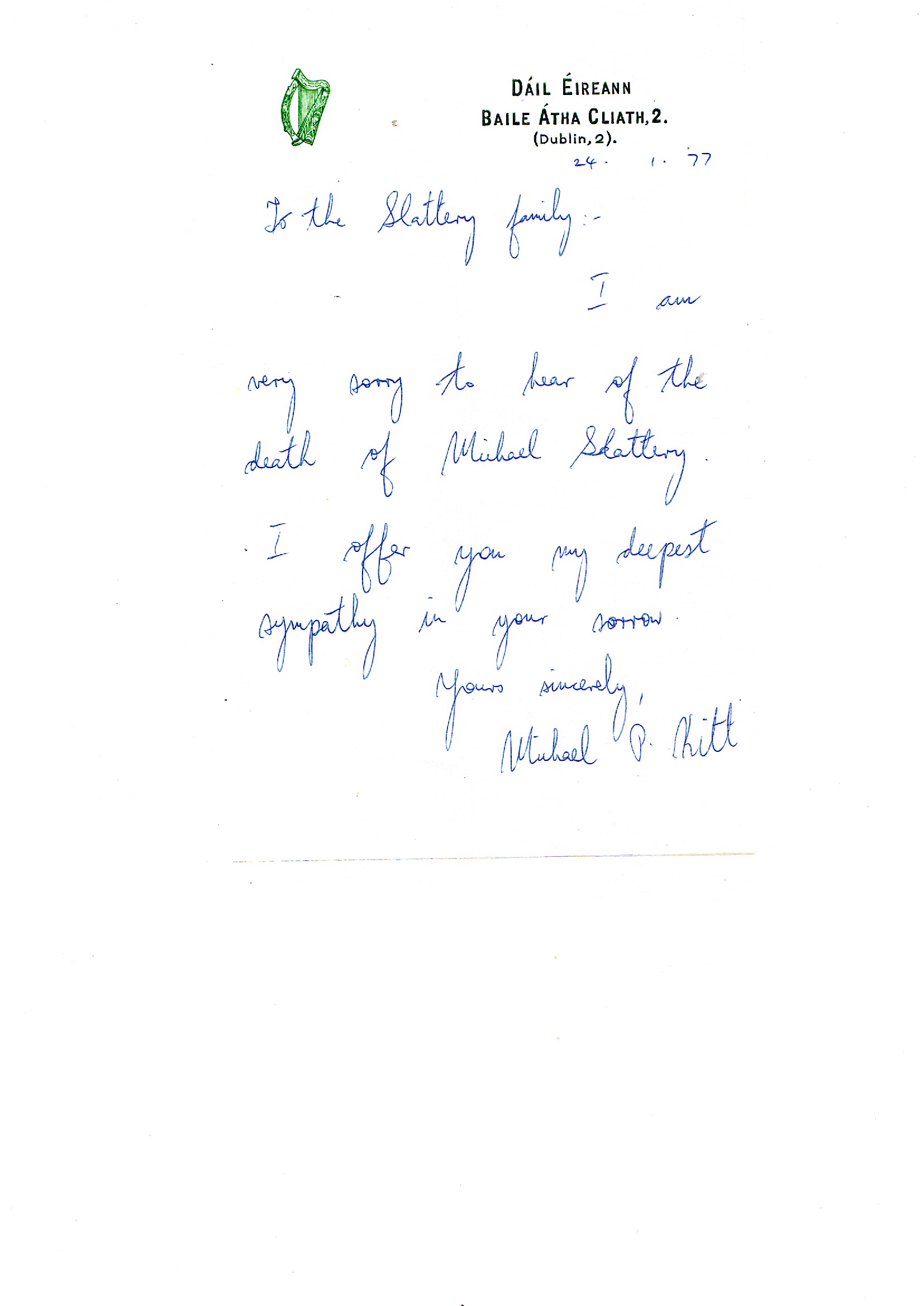
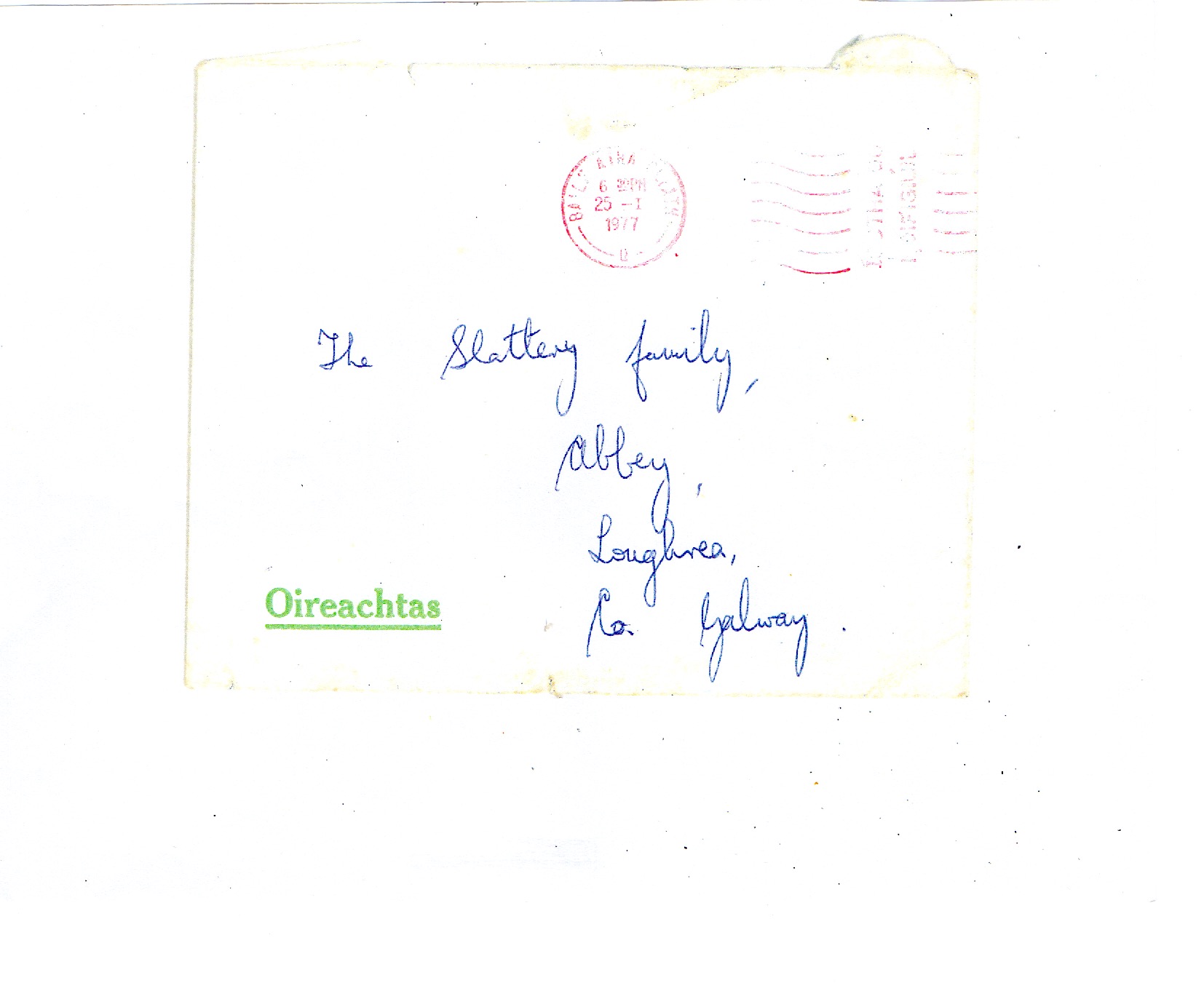
My grandfather, Michael Slattery, was born on 25th August 1897 to Andrew Slattery and Bridget Broderick of Ballyleen, Tynagh. He was their 3rd son of a family of 9 children. His schooling would have finished a few years before the outbreak of World War I in 1914. This caused a rapid increase in demand for roundwood timber to construct the trenches across France and Belgium, synonymous with that war.
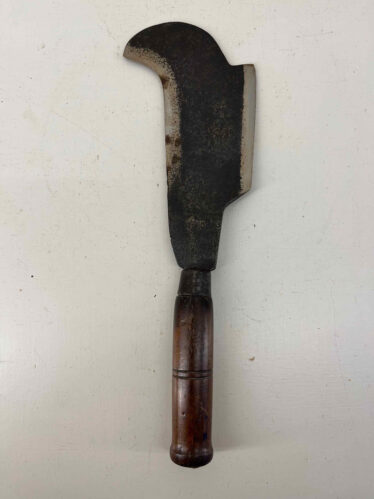
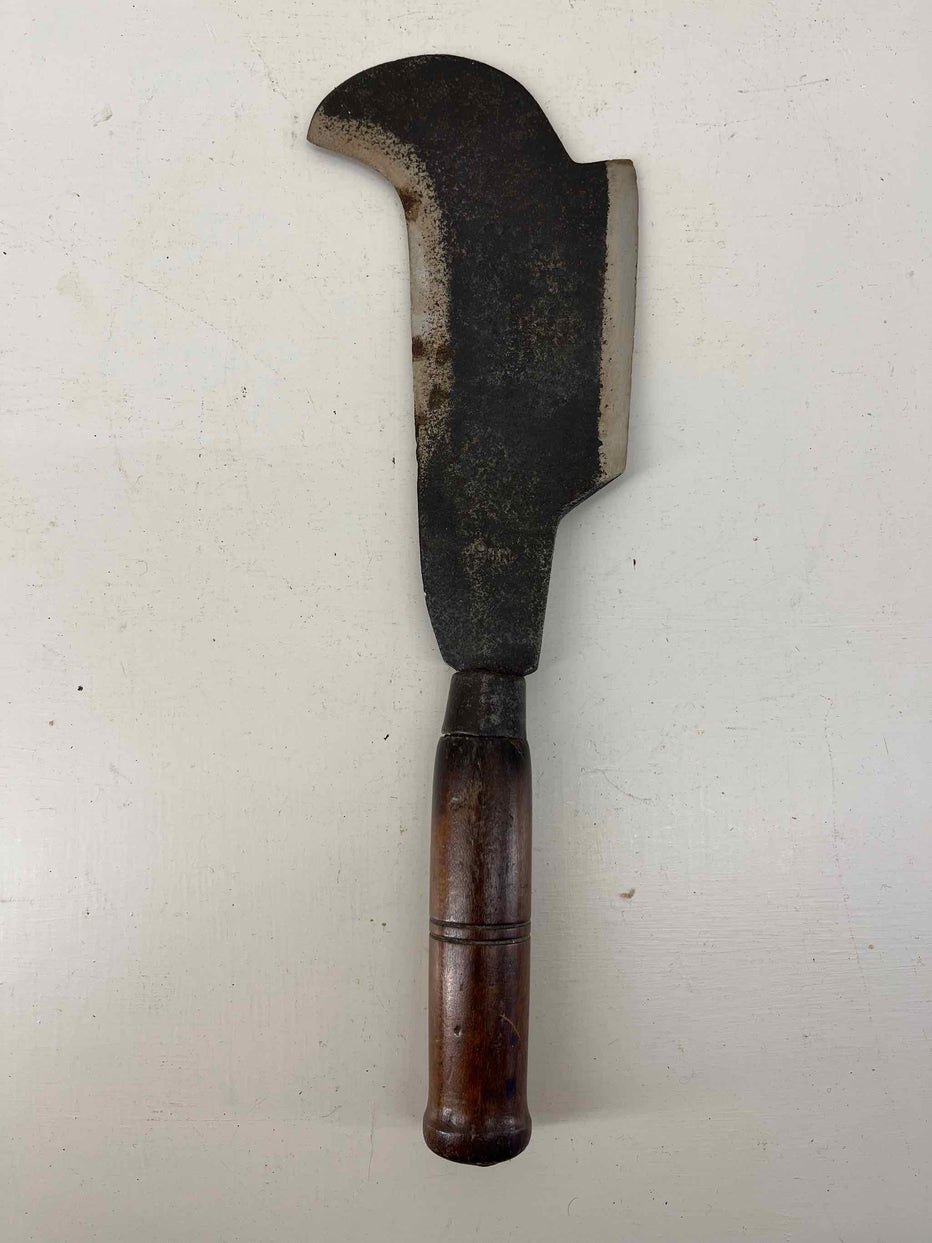
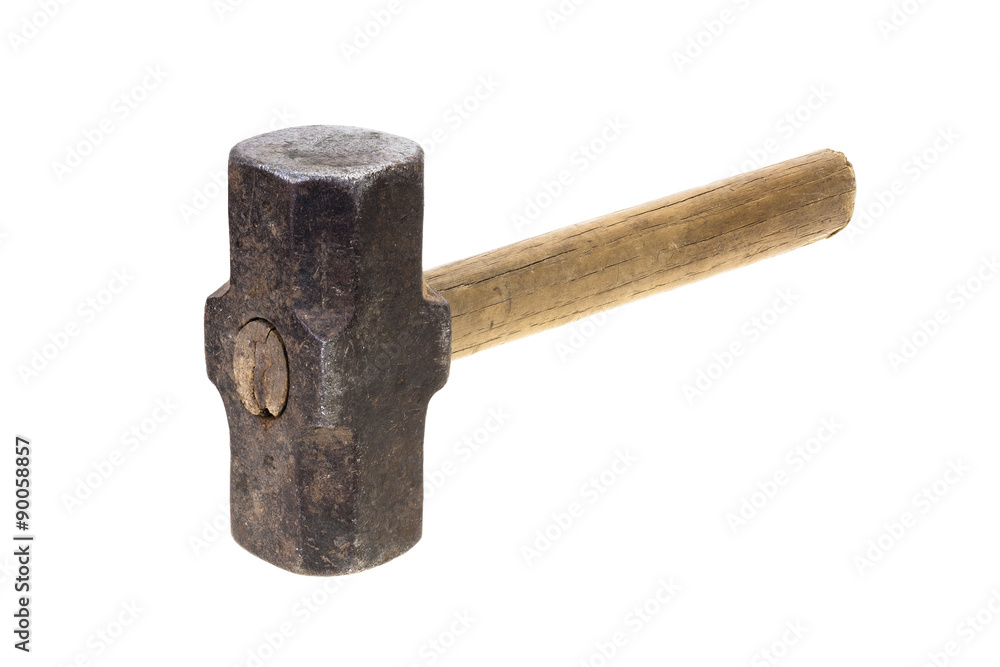
The headline for this article was what came into my head when I heard that Ireland’s Heritage Week 2025 theme was ‘FOUNDATIONS’ recalling one of the many reminiscences last year with Stanney Burke, in Eagle Hill, of my grandparents’ close friendship with his parents. Stanny, as he went into St Feichin’s National School Abbey, in the 1930s, recalled seeing my grandfather with his horse and cart full of stone and sledge hammers, outside his cottage next to the school, ready for road foundations. Such is Stanny’s memory, that the two-wheeled cart was blue and the wooden spoked wheels painted yellow; the horse was brown! So that’s the memory I had to give this headline. But Abbey’s road builder, twenty years earlier, had started work for Galway County Council as Tynagh’s forester, and so I had put the cart before the horse!
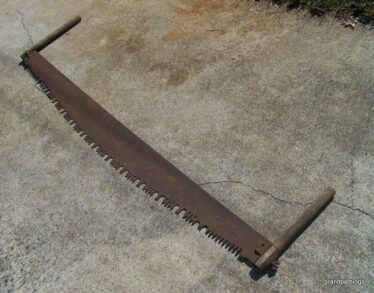
But as I write this, with a little more thought, from 350 miles away across the water, the teenage Michael Slattery, would have had to learn both the skills, needed to transport the annual weight of logs out of a forest and paved pathways within the forest would be needed for the logs loaded onto the longer four-wheeled carts, pulled by horses. Then, another recollection, as a child in the late 1950s, of my standing up in his two-wheeled cart with my grandfather returning from Portumna market. I was just able to see and reach over the cart top where the reins of his grey donkey were held. Having watched on the way to Portumna, I was bemused how was he ‘steering’? So, I asked if I could hold the reins, and with my grandfather’s huge hands over mine, off we set back to Abbey. I detected that it was only small ‘corrections’ by my grandfather’s hands over mine on the reins that was needed to slow the donkey down, as it stayed on the left and knew the way home – just as its Black Donkey predecessor in Christmas Preparations! I also felt the toughened and calloused skin of his palms, a sensation that was to momentarily stop me in my tracks in my working life, decades later.
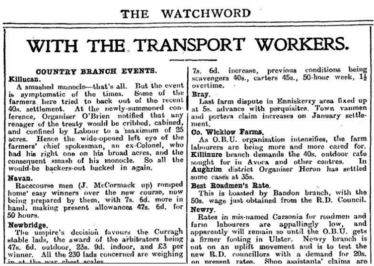
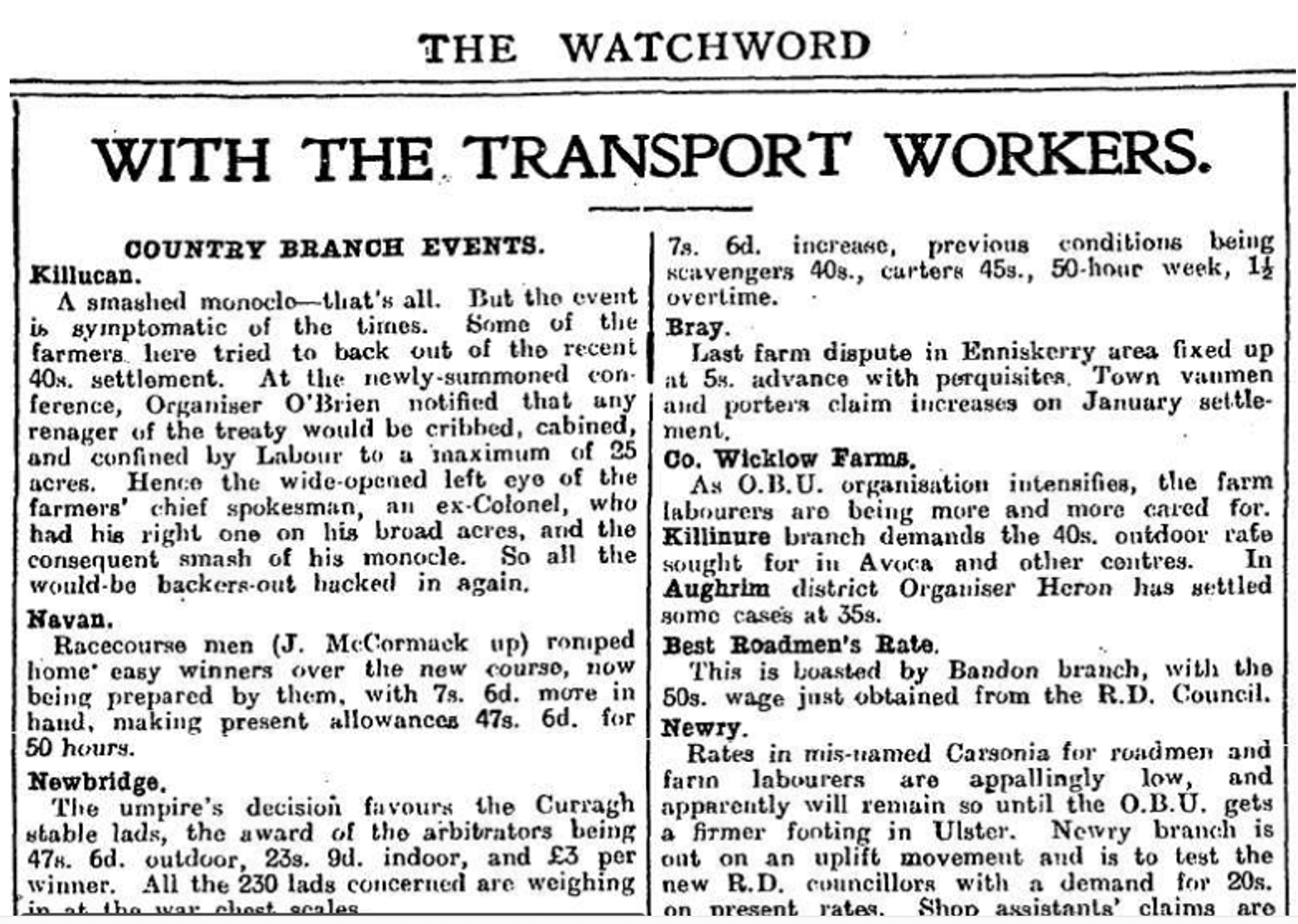
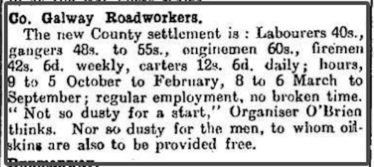
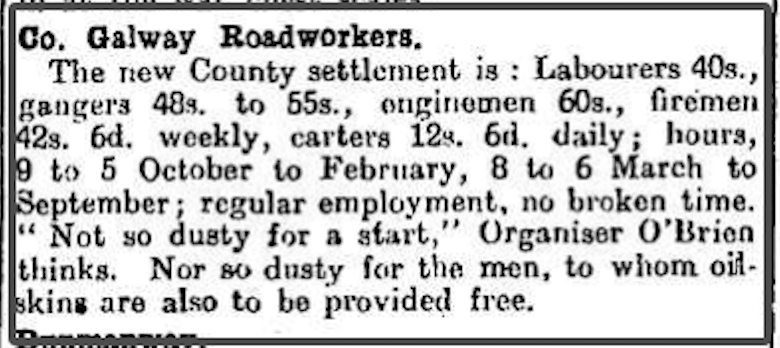
Along with many Tynagh, Abbey and Duniry men, my grandfather would have seen growing employment during The Great Wars, continuing timber demand, sourced from Portumna, Woodford, Ballinakill, Derrybrien, Castledaly and on up to the forests of the Slieve Aughty mountains. Then, with more than 10 years with Galway Co Co he had achieved the Ganger road and forestry supervisory role, and was then able to rent the council cottage in Abbey, next to the school. He married Bridget Hutchinson, Abbey, on 8th September 1926 in Duniry Church. They lived there all their lives; my mother was born there, the eldest of 5 children.
During the last Devensian ice age, most of Ireland, Britain and Northwest Europe were covered by a thick ice sheet stretching south from the Arctic and reaching present day Birmingham and, although the lands were inhospitably frozen that were to become London and Paris, they were spared; there were vast quantities of water locked up within this ice sheet, so that sea levels were 200 metres below today’s levels. As the ice began to melt about 12,000 years ago, it resulted in land bridges in this warming world; the land thawed and in a temperate climate, the tree seeds, blown by wind, then carried by the birds and animals from southern Europe, allowed saplings to grow. Then over the following thousands of years, the great forests established, covering most of the landmass of Europe, throughout Britain, and Ireland.
During the Neolithic period it was fortunate that the West of Ireland and those of our local East Galway forests were left substantially unaffected, unlike the eastern side of Ireland, which started with the deforestation by the Neolithic farmers, who began to traverse the now, as sea levels rose, ever decreasing land bridges.
7000 years ago, our islands had formed. The forests were cleared by these early farmers by burning, throughout Britain, and the East of Ireland, to sow wheat, oats, barley and flax; and when that land fertility was exhausted, they moved on to burning more forest to clear new land for sowing. Then, with the age of the Viking settlements within our islands, their increasing need for sawn wood for longboats, repair and construction, more forests were cut down; followed in the 16th century, with the Tudors’ demands of what remained, for large wooden Atlantic ships to explore the ‘New World’, left Ireland and Britain with rapid deforestation.
The Royal Dublin Society pioneered the promotion of tree planting, beginning in 1786, and by 1806 had achieved 55 million trees planted. Then with The Land Acts of the 19th and 20th centuries, this consequently led to those woodland trees planted 100 years earlier, being cleared, as former landowners disposed of forestry estates. With the acquisition in 1913 of the old Clanrickarde estate, and the Lough Derg and Rosturra Woods, the old rough oak woods were cleared and restocked with conifers by 1933. Coole property, present day, Coole Park Nature Reserve, was bought in 1928 from Lady Gregory, of Abbey Theatre fame and so began Gort Forest, with its geological formation of old red sandstone and limestone. This ground supported the natural regeneration of beech, ash and silver fir trees. It was all part of the new 1920s Irish government initiative, post-World War One, (as in Britain) to replenish and further increase renewable timber resources, to rebuild the foundations of the economy, and create employment. This secured work for my grandfather and his fellow forestry workers, with ongoing national negotiations with their trade union underway. Both countries had depleted national forest estates, only covering 1% of their land areas. Today, Ireland’s forest estate covers almost 12% of the land, with roundwood timber production expected to be 6.5 tonnes by 2028.
The Local Government Act of 1925 gave County Council road workers the responsibility for constructing and maintaining main and county roads. As the foundations of the economy were being rebuilt, in October 1929, the American stock market crash caused a severe worldwide economic shutdown. It developed into the Great Depression, with significant reversal in economic activity and employment across Europe, Britain and Ireland. Ireland’s infrastructure and roads development was constrained in the 1930s, due to scant resources. My mother recalled the times of worry in the cottage when her father was not working, as there were worries for his Council colleagues, and across Ireland, for the nation’s families. My grandparents had the cottage garden for vegetables and grandmother kept a good flock of poultry; she used the eggs to bake cakes, and trade to buy flour. As the Depression eased, the mechanisation of road building and forestry increased – the petrol powered tree cutting, chainsaw, quarries that broke and graded the rocks and chippings. This further technical development and building the network across rural Ireland of Macadamised roads, that were pioneered by Scottish engineer, John Loudon McAdam c1820 allowed American relatives from Waterford to drive a car on their summer visit, to my grandparents in Abbey. The road consisted of crushed stone foundation, now secured with a binding sand, then compacted by a heavy roller. A bituminous tar binder was applied to secure small chippings, with the roller again used to form a convex road profile to shed rainwater. This also ensured a sure footing for trotting donkeys making their way back to Abbey, so that Aunt’s, small boys, and their Christmas parcels arrived safely! The roads surfaces were so improved, that new tractors were being delivered to Abbey from Athenry; one to Stanny’s father at Eagle Hill in 1951. It was a Ferguson TVO, colour grey! The continuing improvement of road technology gave rise to a hard-wearing surface termed ‘Tarmac’ and to the superb motorway network across Ireland that I appreciated during my visits with my mother from the 1980s, and on my own these past 9 years.
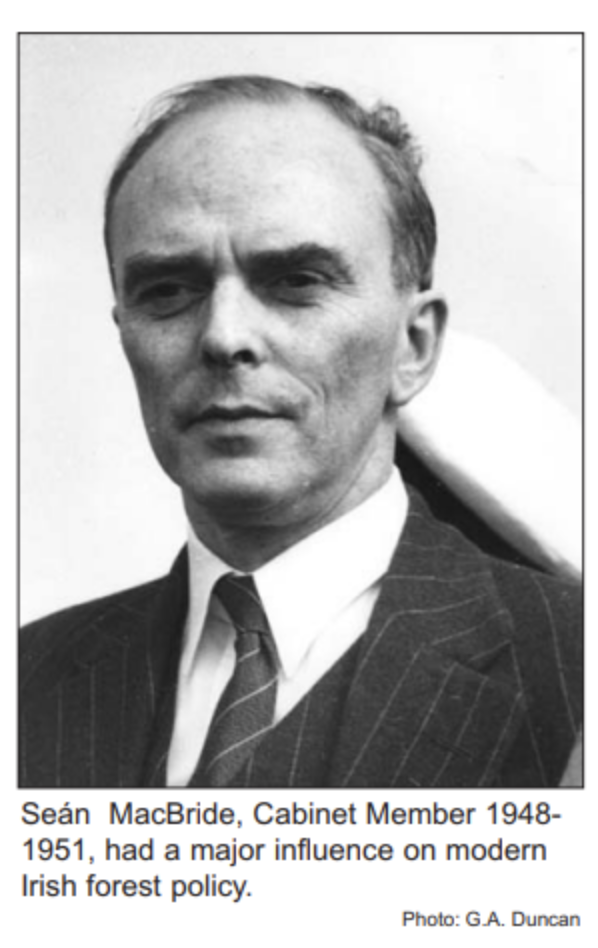
Seán MacBride, Cabinet Minister 1948-1951, had a major influence on modern Irish forest policy. As leader of Clann na Poblachta, and part of the inter-party government, it is said that when he met Taoiseach-in-waiting John A Costello, to discuss coalition policy, MacBride’s emphasis was on increasing afforestation rather than the expected republican demands. Costello, surprised, readily agreed.
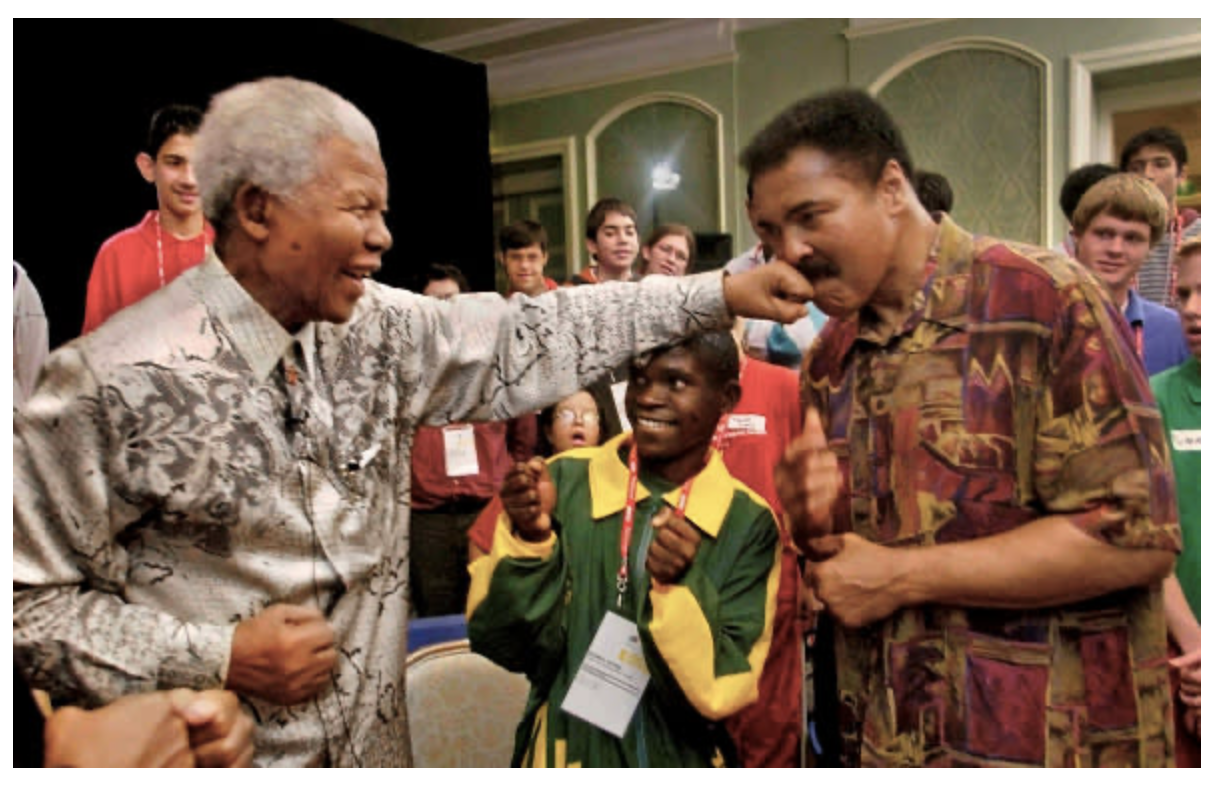
I mentioned earlier of a toughened, calloused hand, that stopped me in my tracks while at work; the inauguration of the Special Olympics in Ireland had been held days earlier in Croke Park. It was June 2003, at Dublin airport, and I had just welcomed my most famous passenger on board my Airbus 321 aircraft, for the flight to London Heathrow. As I grasped Nelson Mandela’s huge right hand, through the handshake, I felt the callous hardened skin. Still contemplating that sensation of his handshake, and having seen him face to face, I had to stop as I walked back to the pilot’s seat in the flight deck, and went into the forward aircraft galley for a ‘moment’. Of course that sensation of Nelson Mandela’s hand jolted my memory. It was back to those hands around mine holding the reins on the way back from a Portumna summer market, 45 years earlier. Both men had handled and broken tons of stone in their lives; Nelson Mandela, doing hard labour, incarcerated on Robben Island, by the apartheid regime. He would walk on those years of broken stone for his country’s road foundations, a free man, and visit Ireland on many occasions as President of South Africa.
The flight was short, helped by a following wind over the Irish Sea, and for once, no delay approaching Heathrow. On the glidepath to Heathrow runway 27R, I made small inputs through the Airbus side stick to achieve a smooth landing for the President. I’m sure the early lesson learned on the grey donkey’s reins, decades earlier, certainly had a ‘hand’ in it! Thank you Grandad, and Grandma.
No Comments
Add a comment about this page